What Some Famous Operas Might Be About
Having never been to an opera, I’ve long wondered what sorts of tales might lie behind these mysterious titles. One can only guess.
Die Fledermaus
A man, a bat, a vendetta.
I Pagliacci
“…being of sound mind, do hereby bequeath my extra-large shoes, my red nose, my orange wig, and a bucket of my tears to my faithless wife. Now she’ll be sorry!”
Madama Butterfly
A brothel for insects: a peculiar tale, often described as “Kafkaesque.”
The Magic Flute
If you play it, you can lead animals and children wherever you want them to go. The river is a popular destination. But that last step is a lulu.
Das Rheingold
The merry tale of a mug of inexpensive beer and the many lives it touches.
The Barber of Seville
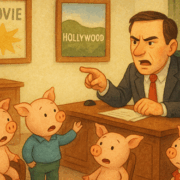
This one has to do with Bugs Bunny, I believe.
Aida
Together with her friend Abetta, this naïve woman helps a charming thief escape the police. The two find themselves ensnared in a criminal justice system that urgently needs reforming.
Così Fan Tutte
It can get very warm inside a pyramid. Luckily, King Tut and his twin brother have loyal servants to fan them. Then everyone gets cozy.
Boris Godunov
The hero, a small Russian spy, seeks to prove to a skeptical moose and squirrel that he’s a nice guy. His much taller, sultry companion turns out to be a great gal, too.
Der Ring des Nibelungen
In his quest for this all-powerful ring, the hero must defeat the horrid little creatures who guard it by nibbling on the lungs of intruders.
Carmen
in Spain, two used auto dealers vie for the love of a sexy gypsy.
Tosca
About a chain of supermarkets in the U.K., but translated into Italian.
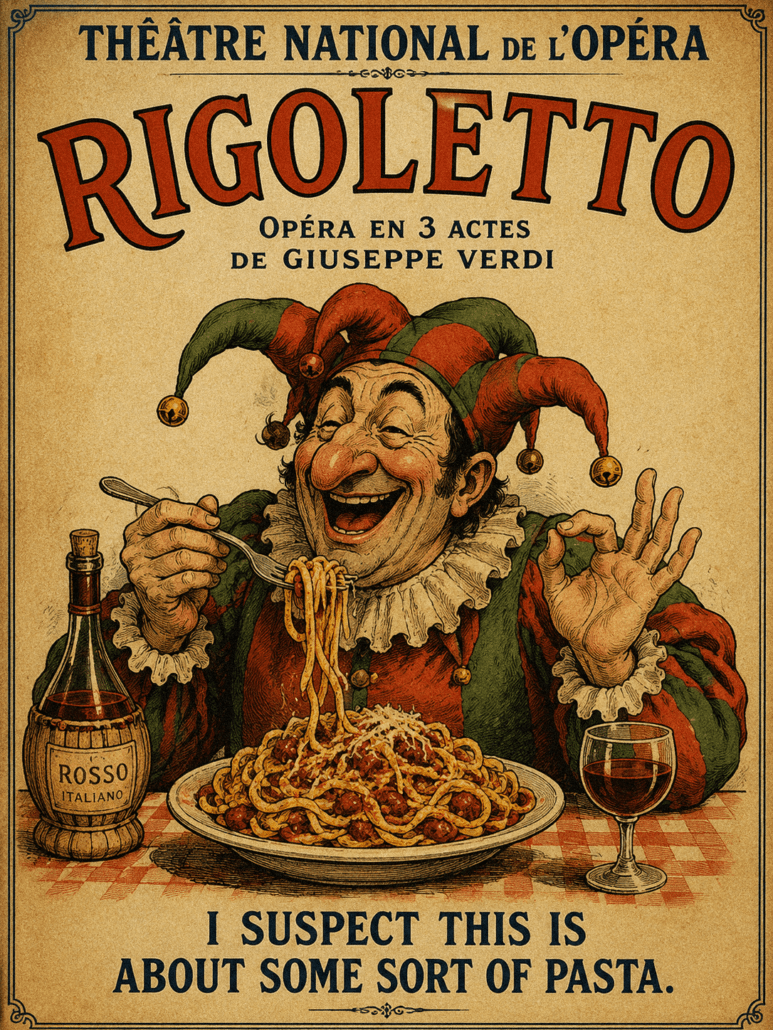
Rigoletto
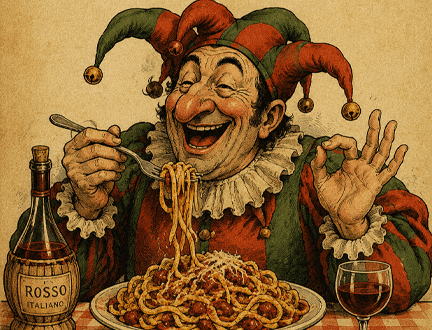
I suspect this is about some sort of pasta.
Tristan and Isolde
The absurdist dialogues of two tramps as they wait at a crossroads for a mysterious figure who never shows up.
The Tales of Hoffman
An aged bookseller in Old Vienna bores customers with tedious accounts of his youthful exploits in the Wienerwald.
Le Nozze di Figaro
About a man with two noses. All his life he is shunned, but when a mysterious odor ruins the village’s tourist trade, his neighbors beg Figaro to help them find the source of the stench. He sulks in his hut, proud and resentful. (Oh,quindi ora hai bisogno di me,” “Oh, so now you need me.”) They have to sing his name many times before he agrees to help.
- About the Author
- Latest Posts

Michael Laser has published eight novels, most recently Futura, about the U.S. under an autocratic president. (Written before 2024!) He is also the author of The Word-Lover’s Lexicon: A Whimsical Collection of Uncommon, Amusing, and Useful Words (Including the Ones You Meant to Look Up but Didn’t). Now and then he writes funny stuff.